
If you live in San Rafael—whether you’re near Fourth Street downtown, up by the Marin County Civic Center, or in a neighborhood like Terra Linda, Gerstle Park, Sun Valley, or Peacock Gap—your home is likely packed with electronics that didn’t exist when many houses here were built. TVs, computers, smart thermostats, EV chargers, garage door openers, tankless water heaters, and modern HVAC controls all depend on clean, stable power. That’s why home surge protection in San Rafael, CA, has shifted from “nice to have” to smart and practical.
A power surge doesn’t have to occur from dramatic lightning. In the Bay Area, many surges come from everyday events: utility switching, outages and restorations, or large motors cycling on and off. Even small, repeated surges can slowly damage sensitive components over time. When homeowners invest in surge protection, they are protecting not only expensive devices, but also comfort systems and the wiring infrastructure that keeps everything running.
In this guide, you’ll learn what surges really are, why San Rafael homes are vulnerable, what whole-home surge protection means (and why power strips aren’t enough), and how a professional installation fits into an electrical safety plan.
Why Surges Happen More Often Than Most People Think
A surge is a short spike in voltage. Some are huge and obvious; many are smaller and repeated, gradually wearing down electronics. In places like San Rafael, surges can occur due to:
- Utility grid switching and routine operations
- Power outages and the moment power is restored
- Nearby faults or equipment issues in the distribution system
- Large motors starting (HVAC, pool equipment, pumps)
- High-demand appliances cycling inside the home
Recent Bay Area outages tied to substation incidents show how disruptive grid events can be and why protecting home systems matters during instability.
If your home is near busy corridors—areas around 101, the Civic Center, or commercial zones off Francisco Blvd—you may also notice more frequent flickers or momentary interruptions. These “tiny blips” are the exact reason that makes home surge protection in San Rafael worthwhile.
What Home Surge Protection Actually Protects
When people hear surge protection, they probably think about protecting a TV. But home surge protection in San Rafael is really about protecting whole systems:
- Refrigerators and freezers (control boards are sensitive)
- HVAC systems (compressor controls and smart thermostats)
- Wi-Fi networks, routers, and smart home hubs
- Induction ranges, ovens, and modern kitchen appliances
- EV charging equipment and garage circuits
- Lighting controls and LED drivers
- Computers and entertainment systems
Homes near landmarks like Dominican University of California–where home offices and hybrid work setups are common–depend heavily on stable power. One damaging surge can wipe out expensive equipment or cause intermittent failures that are hard to diagnose later. That’s why surge protection is often seen as “cheap insurance” for modern living.
The Difference Between Power Strips and Whole-Home Surge Protection
Most plug-in surge strips are Type 3 surge protective devices (SPDs) used at the point of power. They can help, but they have limitations:
- They protect only what’s plugged into them
- They can’t protect hardwired equipment like HVAC components
- They may not protect every circuit in the home
- They don’t stop surges before they reach the electrical panel
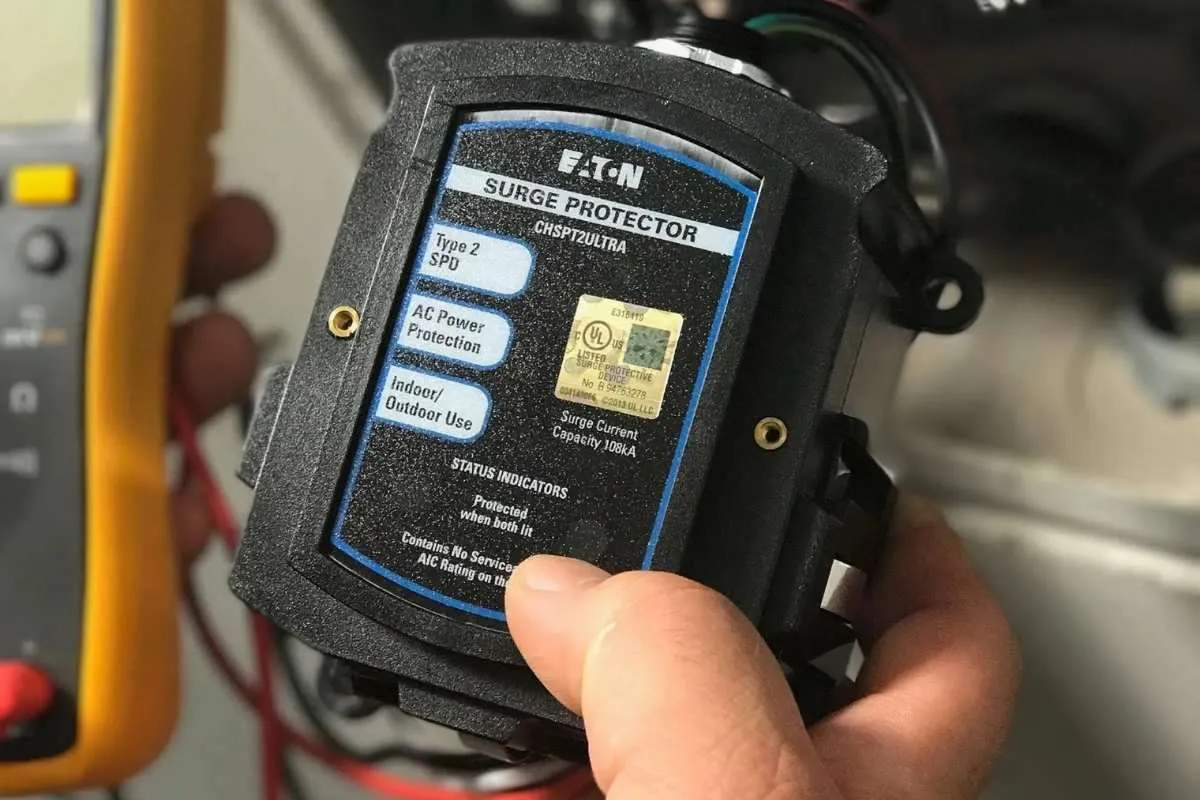
Whole-home surge protection is different. It’s installed at (or near) your main electrical panel, helping block or divert surges before they spread through circuits. Under modern code approaches, the concept of a Type 1 or Type 2 SPD at the panel is increasingly emphasized for homes. Visit the National Electrical Code 2023 Edition for more information.
That’s why homeowners planning upgrades in San Rafael—especially remodels in areas like Loch Lomond, San Rafael Hill, or older parts of Gerstle Park—often choose whole-home surge protection as part of a broader safety upgrade.
Why Whole-Home Surge Protection Is Especially Relevant in San Rafael, CA
San Rafael homes often mix older infrastructure with modern loads. You might have:
- An older service panel with limited space
- Legacy wiring paths and long branch circuits
- New electronics everywhere
- New loads like EV chargers or heat pumps
The result: a system that works, but which is more vulnerable to voltage instability.
If you’re upgrading your electrical panel, surge protection is an ideal add-on. In fact, NEC-related guidance highlights surge protection requirements at dwelling services in newer code cycles (commonly discussed under NEC 230.67 for dwelling unit services).
Home surge protection isn’t only for “storm country.” It’s for modern homes that rely on modern electronics.
How Surge Protective Devices Are Rated and What “UL 1449” Means
Not all surge devices are equal. One major benchmark is UL 1449, the standard used to evaluate surge protective devices. UL 1449 covers how SPDs are tested and classified (including Type 1, Type 2, and Type 3).
When shopping for or installing whole-home surge protection, you want an SPD that is UL Listed and appropriate for your service type and installation location. A licensed electrician will also ensure it’s installed correctly (and as close to the service equipment as is practical), because installation quality affects performance.
Common Signs Your Home May Be Experiencing Surge Events
Many surges don’t announce themselves. Still, homeowners in San Rafael often notice clues:
- LED bulbs failing earlier than expected
- Electronics acting “glitchy” or resetting
- Flickering lights when large equipment starts
- GFCI/AFCI nuisance trips during outages/restorations
- Router/modem failures after a power interruption
If you’re seeing repeated device failures, especially in areas closer to the Bay where weather and grid activity can be more noticeable, surge protection is a smart next step.
What a Licensed Electrician Checks Before Installing Whole-Home Surge Protection
Before installing whole-home surge protection, an electrician will typically verify:
- Panel condition and available space
- Service size and grounding/bonding integrity
- Proper connection point (Type 1 vs Type 2 placement)
- Whether your home would benefit from a panel upgrade first
- Any signs of overheating, corrosion, or loose terminations
This is also a good time to consider panel modernization if your system is crowded or outdated.
Layered Protection: The Smartest Strategy for San Rafael Homes
The best approach is usually layers of protection:
- Whole-home surge protection at the panel (Type 1 or Type 2 SPD)
- Quality point-of-use protectors for sensitive electronics (Type 3)
- Good grounding and bonding (the foundation of protection)
- Optional surge protection for data/coax lines if needed
This layered plan is why structured home surge protection works so well; it reduces risk across the entire property, not just at one plug.
If you’ve invested in smart-home tech near Downtown San Rafael or run a home office near Dominican University, this layered approach can prevent expensive interruptions.
Pairing Surge Protection With Panel Upgrades and EV Readiness
The idea of surge protection often comes up when homeowners are adding:
- EV chargers
- New HVAC systems
- Kitchen remodel circuits
- Solar and battery equipment (where applicable)
These upgrades increase the value of protecting the entire home. If you’re already planning electrical work, adding home surge protection in San Rafael can be one of the most cost-effective decisions you can make.
Visit the Alternative Fuels Data Center page of the U.S. Department of Energy’s website for a good overview of EV home charging basics and why electrical capacity matters.
Area We Serve Across San Rafael, CA
Rocky Hill Electric provides home surge protection in San Rafael throughout the city, including Downtown, Terra Linda, Gerstle Park, Sun Valley, Peacock Gap, Loch Lomond, and the neighborhoods surrounding the Marin County Civic Center.
Safeguard Your San Rafael Home with Surge Protection
If you’re upgrading appliances, adding EV charging, or simply want to protect your home’s electronics and comfort systems, now is the right time to install surge protection. Rocky Hill Electric can evaluate your electrical panel, recommend the right SPD solution, and install whole-home protection that helps safeguard your home from everyday surge events.
Get started with Rocky Hill Electric:
Protect your investments, reduce the risk of surprise failures, and bring modern reliability to your home with home surge protection in San Rafael.
FAQ: Home Surge Protection in San Rafael, CA
1. Is home surge protection in San Rafael only needed because of lightning?
No. Many surges come from utility switching, outages/restorations, and equipment cycling—not just lightning.
2. What’s the difference between a surge strip and whole-home surge protection?
A surge strip protects only what’s plugged into it. Whole-home surge protection helps protect the entire electrical system at the panel.
3. Does modern electrical code require surge protection?
Newer NEC cycles commonly discuss surge protection requirements for dwelling unit services (often under NEC 230.67).
4. How do I know if a surge device is reputable?
Look for devices evaluated under recognized standards such as UL 1449 and installed according to manufacturer guidance.
5. Can whole-home surge protection help with flickering lights?
It can help protect equipment from surge damage, but flickering can also indicate wiring, load, or utility issues. An electrician can diagnose the real cause.
6. Should I install surge protection during a panel upgrade or remodel?
Yes. Adding home surge protection in San Rafael during a panel upgrade or remodel is efficient and helps protect all the new electronics and circuits you’re adding.
Still Have Questions? Let’s Talk