
It’s confusing (and honestly unsettling): You walk into the bathroom, garage, kitchen, or exterior patio, and the outlet is “dead” again. Nobody plugged anything in, yet the protection device tripped. If you’re dealing with this, a licensed electrician in San Rafael, CA, can help you pinpoint the real cause quickly, because outlets don’t trip for no reason. Usually, something else on that same circuit (or a wiring condition you can’t see) is triggering the trip.
This guide explains the most common reasons an outlet trips when nothing is plugged in, why breakers keep tripping (even with “no load”), what you can safely check yourself, and when it’s time to call an electrician to prevent damage or hazards.
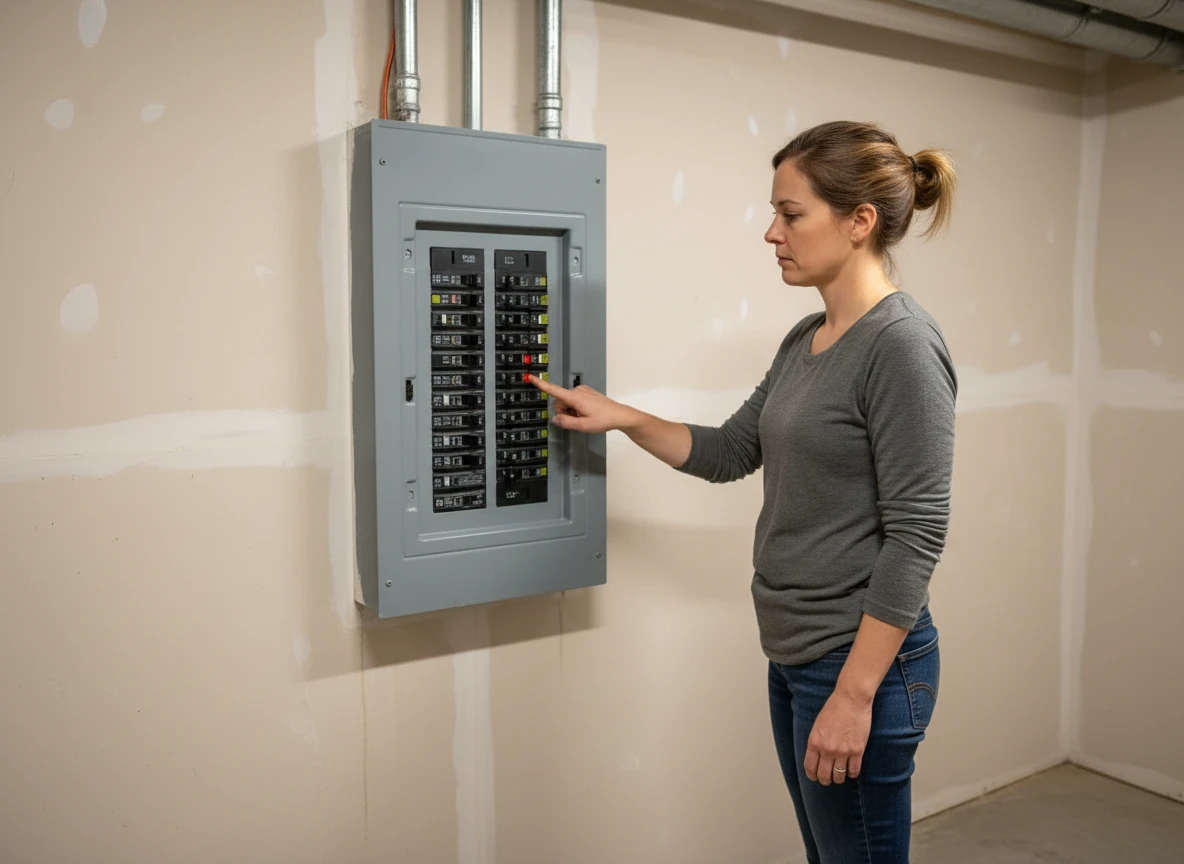
First: Is It the Outlet Tripping, or the Breaker?
Many homeowners say “the outlet tripped,” but there are two different situations:
- A GFCI outlet tripped (the receptacle has TEST/RESET buttons)
- A circuit breaker tripped in the main panel (sometimes a GFCI/AFCI breaker)
A licensed electrician in San Rafael, CA, will confirm which device is actually opening the circuit, because the diagnosis changes depending on whether it’s a GFCI receptacle, an AFCI breaker, or a standard breaker. If breakers keep tripping, it can be overload, ground fault, arc fault, or equipment failure.
To troubleshoot GFCI or AFCI tripping issues, refer to the detailed guidance available on the ExpertCE website.
The Most Common Reasons an Outlet Trips With Nothing Plugged In
1. The Outlet Is Protecting Downstream Outlets, Not Just Itself
A single GFCI receptacle can provide protection for several “downstream” outlets on the same circuit, potentially extending to other areas (e.g., from a garage to the exterior, or from a bathroom to a nearby hallway). Consequently, even with nothing connected to that specific outlet, a device plugged in elsewhere could still cause it to trip. This is a primary reason why people often mistakenly believe the outlet trips “for no reason.”
If breakers keep tripping, a licensed electrician in San Rafael, CA, can map the circuit and identify what’s downstream so you’re not left guessing.
2. Moisture Intrusion (Especially in Bathrooms, Kitchens, Garages, and Outdoors)
Moisture is a huge trigger for GFCI trips because the device is designed to detect leakage current to ground. Outdoor outlets, garage outlets, and bathroom outlets can trip after rain, heavy fog, irrigation overspray, or even a slow leak in a wall. Sometimes, moisture enters an exterior box through worn gaskets or cracked covers.
For a comprehensive article on common “nuisance” Ground-Fault Circuit Interrupter (GFCI) trips and why this essential protection must not be removed, please visit the insight section of the Henderson Engineers website.
If moisture is suspected and breakers keep tripping, don’t keep resetting: Call a licensed electrician in San Rafael, CA, to check exterior box sealing, conduit entry points, and any signs of water in device boxes.
3. A Failing GFCI Receptacle (Yes, The Device Itself Can Go Bad)
GFCI receptacles can wear out over time, especially in damp or dusty locations or where they’ve tripped frequently. Internal components can become overly sensitive or mechanically unreliable. If the receptacle immediately trips after being reset, even with all devices unplugged, the outlet itself could be faulty, or it might be detecting current leakage elsewhere within the circuit.
The serious nature of minimizing nuisance tripping is highlighted by recent industry focus, including UL 943 discussions supported by the CPSC, as detailed in an article on high-frequency GFCIs and technology to reduce nuisance tripping.
A licensed electrician in San Rafael, CA, can test the device properly and confirm whether replacement is appropriate.
4. Neutral/Ground Issues (Shared Neutrals, Loose Neutrals, or Miswired Neutrals)
A loose neutral connection–at the panel, a junction box, or a receptacle–can cause intermittent trips or “phantom” behavior. Shared neutrals (multi-wire branch circuits) can also trip GFCIs/AFCIs when neutrals aren’t handled correctly.
If the breakers keep tripping, neutral integrity is one of the first things a licensed electrician in San Rafael, CA, will check because it’s both common and potentially hazardous.
5. Arc-Fault (AFCI) Trips Caused by Wiring Damage or Certain Devices
If your breaker is AFCI (or dual-function AFCI/GFCI), it’s looking for arc signatures that can lead to electrical fires. Sometimes this is a true wiring issue (loose connection, damaged conductor, staple through wire). In other cases, certain motors or electronics can create waveforms that resemble arcing, leading to nuisance trips.
A key resource from a leading device manufacturer explains AFCI nuisance behavior and appliance signatures: Understanding AFCI Arc-Fault Circuit Interrupter Challenges and Addressing Nuisance Tripping.
If the breakers keep tripping and you suspect AFCI involvement, a licensed electrician in San Rafael, CA, can determine whether it’s a true arc fault or a compatibility or installation issue.
6. Hidden Load on the Circuit (You Forgot What’s Connected)
Even when “nothing is plugged in,” the circuit may feed:
- A garage door opener
- A refrigerator in the garage
- A sump or condensate pump
- Under-cabinet lighting transformers
- A hardwired bathroom fan/light combo
- Exterior landscape lighting transformer
These loads can be intermittent, so the trip can appear random. A specialist will identify the complete load list and verify circuit sizing.
7) Rodents, Nails, or Damaged Insulation in Walls or Attics
In older homes (and even newer ones), rodent damage or a fastener through a cable can create leakage or arcing that trips protection even with no plug-in load. This is one of the biggest reasons to stop repeated resets and get a licensed electrician in San Rafael, CA, involved when the behavior is persistent.
What You Can Safely Do Before Calling a Licensed Electrician in San Rafael, CA: A 5-Step Guide
If you’re comfortable and feel safe doing basic checks, here’s a simple process:
- Identify whether it’s a GFCI outlet or breaker
- If it’s a GFCI receptacle, press RESET
- If it’s a breaker, fully switch it OFF, then ON
- Unplug everything on that circuit
- Unplug all visible devices connected to outlets that might be downstream
- Reset and wait
- If it trips immediately: probably wiring/device issue
- If it trips after rain/humidity: moisture intrusion likely
- If it trips at night or early morning: pumps/defrost cycles can be clues
- Check exterior outlets and covers
- Look for cracked covers, missing gaskets, or visible corrosion
- Stop resetting if you smell heat/burning or see discoloration
- That’s “call now” territory for a licensed electrician in San Rafael, CA
If breakers keep tripping and you can’t link it to a specific device, a professional diagnostic is the safest step.
How a Pro Actually Diagnoses “Breakers Keep Tripping”
A licensed electrician in San Rafael, CA, will usually:
- Map the circuit (what outlets/lights are actually on it)
- Test GFCI/AFCI devices properly
- Check neutral/ground integrity and torque at terminations
- Use load testing and insulation/leakage testing where appropriate
- Inspect for moisture intrusion, corrosion, or damaged conductors
- Verify code-correct wiring for multi-wire branch circuits
This is also where professional tools matter; the goal is to fix the root cause, not just “swap parts until it stops.”
For residential electrical needs, including troubleshooting and repairs, you can visit our Residential Electrical Services page. If the condition of the breaker or panel is a concern, information regarding electrical panel upgrades is available.
Why You Shouldn’t “Solve” This by Removing Protection
When outlets or breakers trip repeatedly, it’s tempting to replace a GFCI with a standard receptacle, swap breakers randomly, or tie neutrals together. DON’T. Protection devices trip for a reason and bypassing them can create a shock or fire risk, and also may create code or insurance problems.
Appliance manufacturers and safety groups have published guidance about reducing nuisance tripping without removing protection, especially as electrification increases.
For information and analysis on nuisance tripping of Ground Fault Circuit Interrupters (GFCI), AHAM provides guidance on its website, which can be found here.
If breakers keep tripping, the solution starts with a proper diagnosis by a licensed electrician in San Rafael, CA–not the removal of safety features.
Areas We Serve Across San Rafael, CA
Rocky Hill Electric supports homeowners and property managers throughout San Rafael, including central neighborhoods, hillside homes, and older housing where wiring issues are more common.
Ready to Stop the Nuisance Trips? Call Rocky Hill Electric: Your San Rafael Electrician
If your outlet keeps shutting off “for no reason” or breakers keep tripping, don’t leave it to guesswork. Rocky Hill Electric provides professional troubleshooting to locate the real cause, whether it’s moisture intrusion, a failing GFCI, a neutral/ground issue, or a hidden wiring fault.
Work with a licensed electrician in San Rafael, CA, who can diagnose the problem correctly, make code-compliant repairs, and help prevent repeat trips.
Talk to Rocky Hill Electric today!
FAQ: Licensed Electrician in San Rafael, CA
1. Why does my GFCI outlet trip when nothing is plugged in?
Often, the GFCI protects downstream outlets, so something else on the circuit (or moisture/wiring leakage) can trip it, even if that receptacle is empty. A licensed electrician in San Rafael, CA, can map the circuit and locate the source.
2. My breakers keep tripping. Does that mean my breaker is bad?
Sometimes, but not always. A breaker can trip due to a real fault (ground fault, arc fault, overload) or due to a failing device. Testing is the only reliable way to know.
3. Can rain or humidity cause tripping even indoors?
Yes. Moisture can enter exterior boxes and migrate into conduits or wall cavities, or a small plumbing leak can dampen a receptacle box. If breakers keep tripping after wet weather, it’s worth investigating promptly.
4. Is it safe to keep resetting a tripping outlet or breaker?
If it trips once, resetting may be fine. If it trips repeatedly, stop resetting, especially if there’s heat, buzzing, burning smell, or discoloration. Call a licensed electrician in San Rafael, CA, to prevent damage or hazards.
5. What’s the difference between AFCI and GFCI?
GFCI protects against shock from leakage current. AFCI helps reduce fire risk by detecting arc-fault signatures. Many newer breakers are dual-function.
6. When should I call a licensed electrician in San Rafael, CA?
Call if trips are frequent, unexplained, weather-related, or accompanied by heat/smell/noise. If the breakers keep tripping and you can’t identify a clear cause, professional diagnosis is the safest path.
Still Have Questions? Let’s Talk